Custom vs. Standard Inverted Roller Screws: Lead Time, Cost Analysis, and RFQ Best Practices
A comprehensive procurement and engineering guide to choosing between standard and custom inverted roller screws, covering lead times, TCO, and RFQ checklists.
The decision to procure planetary inverted roller screws often places engineering requirements directly at odds with procurement constraints. Engineers demand the highest possible load density in the tightest possible envelope, frequently leading to highly customized, bespoke designs. Meanwhile, procurement teams and buyers are tasked with reducing the Total Cost of Ownership (TCO), mitigating supply chain risks, and accelerating delivery schedules—goals that heavily favor off-the-shelf, standard components.
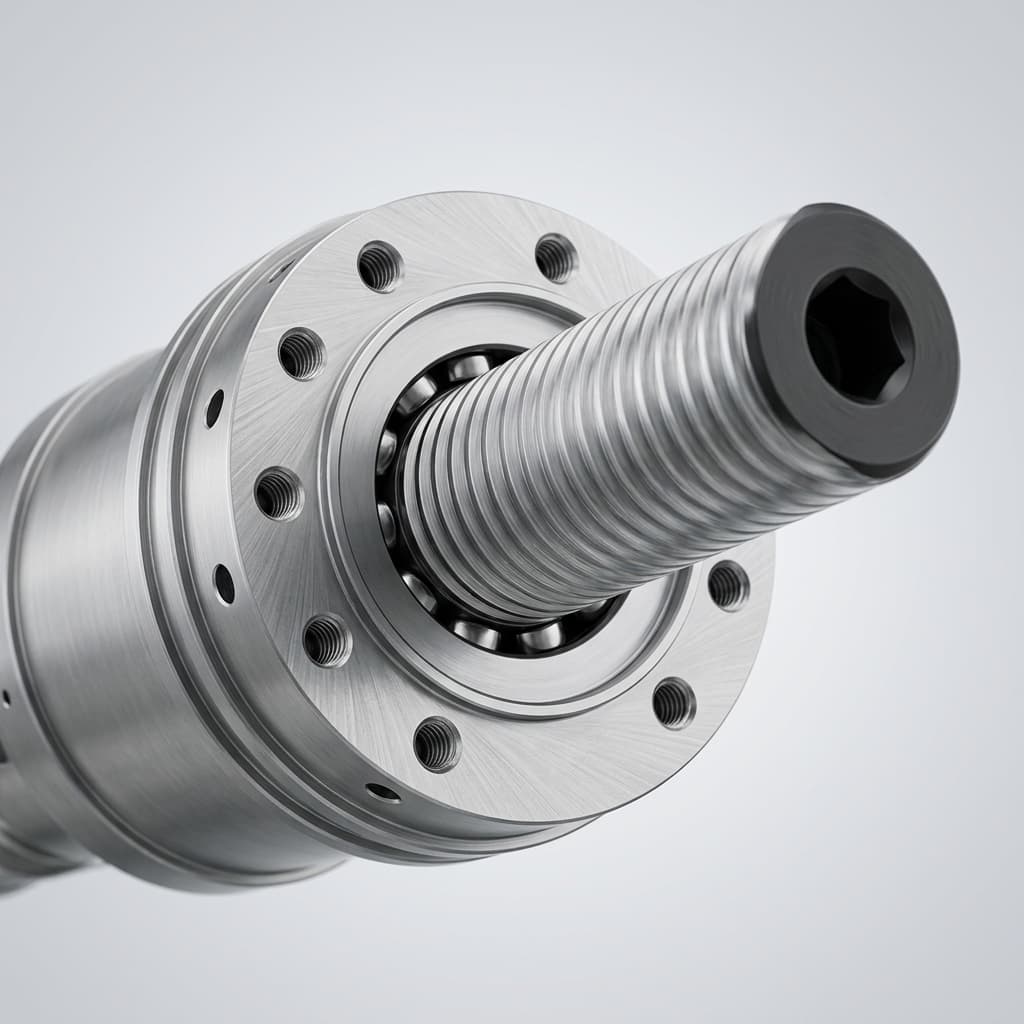
When specifying an inverted roller screw—where the nut is elongated and threaded internally to allow the screw shaft to act as the push rod, a design commonly used in ultra-compact linear actuators and humanoid robots—the standard vs. custom debate becomes even more critical. Because the inverted architecture inherently requires tighter manufacturing tolerances and more complex integration with motor rotors, any deviation from standard catalog specifications can exponentially inflate both cost and lead time.
This comprehensive guide explores the exact trade-offs between standard and custom inverted roller screws. We will break down the cost drivers, analyze lead time realities, provide an actionable RFQ checklist, and offer a clear decision-making framework to help buyers, distributors, and engineering teams source the right actuator solution.
Scope note (July 21, 2026): This guide is written for global OEM procurement, mechanical engineering, and supplier-quality teams comparing standard, modified-standard, and custom inverted roller screw options before RFQ. Lead-time and cost ranges below are screening estimates based on common supplier workflows, not certified quotations; validate dynamic load rating, preload, material, heat treatment, inspection plan, Incoterms, and delivery slot with the selected manufacturer before purchase release.
If you need product architecture context first, review our inverted planetary roller screw and standard planetary roller screw pages before using this custom-vs-standard RFQ guide. For an active drawing review, send your load, stroke, and volume assumptions.
What Defines a "Standard" Inverted Roller Screw?
In the context of high-precision linear motion, a "standard" inverted roller screw refers to a configuration that the manufacturer has fully productized. These units are built to fixed dimensional catalogs, pre-engineered load ratings, and standardized lead and pitch combinations.
Standard inverted roller screws typically feature:
- Predetermined Diameters and Leads: For instance, standard sizes like 15mm, 20mm, 30mm, or 39mm with standard leads of 4mm, 5mm, or 10mm.
- Off-the-shelf End Machining: Basic, pre-defined bearing journals or standardized threaded ends that require no specialized programming on CNC lathes.
- Pre-qualified Materials: High-alloy steels that are already heat-treated, ground, and stocked in the manufacturer's raw material inventory.
- Predictable Performance Data: Documented dynamic and static load capacities that have been physically tested and validated over thousands of cycles.
By adhering to standard specifications, manufacturers can leverage economies of scale, batch-producing components to minimize setup times and machine changeovers. For procurement, this translates to predictable pricing and significantly shorter delivery windows.
What Qualifies as a "Custom" Inverted Roller Screw?
A custom inverted roller screw is any unit that deviates from the manufacturer's standard catalog geometry, material, or processing. Because inverted roller screws integrate the nut directly into the surrounding actuator housing (or motor rotor), engineers frequently request custom modifications to eliminate external couplings and save axial space.
Common customizations include:
- Unique End Machining: Splines, hex drives, non-standard threads, or integrated flanges designed to mate with a proprietary gearbox or bearing arrangement.
- Non-Standard Lengths or Stroke Constraints: While standard screws can be cut to length, altering the internal geometry of the inverted nut to fit a specific envelope requires complete re-engineering.
- Special Materials and Coatings: Using aerospace-grade stainless steel for corrosion resistance, or applying proprietary thin-film coatings (like DLC or Armoloy) for vacuum or cleanroom environments.
- Custom Preload Settings: Tuning the internal preload of the rollers to achieve a specific stiffness or backlash profile that falls outside the catalog norm.
Customization is not inherently bad; in fact, for cutting-edge robotics or specialized aerospace actuators, it is often necessary. However, every custom feature introduces a layer of Non-Recurring Engineering (NRE) costs and supply chain friction.
For programs where the required change is mainly shaft-end machining, preload tuning, or inspection documentation, compare the request against our custom roller screw manufacturing capability page before assuming a fully bespoke nut and roller set is required.
Lead Time Analysis: The Hidden Drivers of Delay
Lead time is arguably the most critical metric for procurement teams managing new product introductions (NPI) or maintaining production lines. The lead time disparity between standard and custom inverted roller screws can be staggering.
Standard Procurement Cycle (Typically 4 to 8 Weeks)
Standard units benefit from an optimized supply chain. Manufacturers typically hold standard forgings and blanks in stock. When an order is placed, the process only requires cutting to length, standard end machining, assembly, and final testing. In some cases, distributors hold completed standard units, reducing lead time to a matter of days.
Custom Procurement Cycle (Typically 12 to 24+ Weeks)
When a custom request is initiated, the clock starts ticking long before manufacturing begins. The custom timeline typically includes:
- Application Engineering Review (1-3 weeks): The manufacturer's engineers must validate that the custom geometry can handle the required dynamic loads without buckling or premature spalling.
- Design and Print Approval (1-2 weeks): Formal CAD models and 2D manufacturing prints must be generated and approved by the buyer.
- Special Tooling and Setup (2-4 weeks): If the custom lead or thread profile requires new grinding wheels or specialized workholding fixtures, these must be procured and qualified.
- Raw Material Sourcing (4-8 weeks): If non-standard steel grades are requested, the manufacturer may be at the mercy of global steel mill minimum order quantities (MOQs) and delivery schedules.
- Machining, Heat Treatment, and Grinding (4-6 weeks): Custom batches disrupt standard production flows, meaning they often sit in queues waiting for machine time. Heat treatment for custom dimensions also requires specialized furnace cycles to prevent distortion.
Cost Analysis and Total Cost of Ownership (TCO)
Comparing the cost of standard vs. custom inverted roller screws requires looking beyond the initial purchase order price.
Unit Price and NRE
Standard screws amortize the cost of engineering, tooling, and setup over hundreds or thousands of units. A custom screw forces the buyer to absorb the Non-Recurring Engineering (NRE) cost entirely. NRE charges can range from a few thousand dollars for simple modifications to tens of thousands for fully bespoke aerospace designs. Furthermore, the unit price of a custom screw in small volumes (e.g., prototypes) can be 200% to 500% higher than a comparable standard unit.
The TCO Perspective: When Custom Saves Money
Despite the higher upfront cost, custom inverted roller screws can sometimes lower the Total Cost of Ownership. If a custom machined end allows an engineer to eliminate an expensive zero-backlash coupling, a secondary bearing support block, and a complex adapter plate, the total bill of materials (BOM) cost for the actuator assembly may decrease. Furthermore, reducing part count inherently increases system reliability, potentially lowering warranty and maintenance costs over the machine's lifespan.
To evaluate this accurately, procurement must work closely with engineering to quantify the cost of the surrounding components that a standard screw necessitates versus the premium of a customized screw.
Decision Architecture: Choosing the Right Path
To assist engineering and procurement in aligning their strategies, we have developed a clear decision architecture. The following diagram illustrates the primary pathways for selecting between standard and custom inverted roller screw configurations.
Quantitative Comparison: Standard vs. Custom
To frame the expectations clearly, the following table outlines the stark differences across critical procurement and engineering dimensions.
| Evaluation Metric | Standard Inverted Roller Screw | Custom Inverted Roller Screw | Impact on Project |
|---|---|---|---|
| Lead Time | 4 to 8 Weeks | 12 to 24+ Weeks | Critical path constraint for product launches. |
| Unit Price | Baseline Cost | 1.5x to 5x Premium (depending on qty) | Direct impact on gross margin and BOM cost. |
| NRE / Setup Fees | None | $2,000 to $20,000+ | Initial capital expenditure hurdle. |
| Minimum Order Qty | Often 1 Piece | Typically 10+ Pieces | Impacts prototyping flexibility and inventory holding. |
| Testing & Validation | Pre-Validated | Requires Custom Qualification | Adds timeline risk if the first article fails testing. |
| Replacement Spares | Widely Available | Long wait for replacements | High risk of machine downtime in the field. |
| Design Integration | Requires adapters/couplings | Optimized for space and part count | TCO may balance out if custom parts eliminate adapters. |
The Ultimate RFQ Checklist for Procurement Teams
When procurement teams send an RFQ (Request for Quote) to manufacturers for inverted roller screws, vague or incomplete information is the leading cause of delayed quotes and pricing inaccuracies. Whether seeking a standard catalog item or a highly customized assembly, your RFQ must be comprehensive.
Use the following checklist to guarantee rapid, accurate responses from roller screw suppliers:
- Exact Dynamic and Static Loads: Clearly define the peak load, continuous operating load, and maximum static shock load. Do not simply provide motor torque.
- Duty Cycle and Velocity Profile: Provide the percentage of time the actuator is moving versus resting, the target linear speed (mm/s), and acceleration rates.
- Stroke Length and Overall Length Limits: Specify the required active stroke and the hard absolute limits of the physical space available.
- Desired Life Expectancy (L10 Life): Quantify how many millions of revolutions or linear kilometers the screw must survive before statistical failure.
- Environmental Conditions: Detail the operating temperature range, exposure to contaminants (dust, water, chemicals), and vacuum or cleanroom requirements.
- End Machining Requirements: Provide a fully dimensioned 2D print of any custom shaft ends, indicating bearing journals, threads, and keyways.
- Lubrication Preferences: Specify if the unit will use grease or oil, and if there are specific industry requirements (e.g., food-grade H1 grease).
- Target EAU (Estimated Annual Usage): Volume dictates manufacturing strategy. Quote requests for 1 piece are handled vastly differently than requests for 5,000 pieces per year.
By proactively supplying these details, you eliminate the back-and-forth email chains that typically consume the first two weeks of the procurement process.
Strategic Compromise: "Modified Standard"
For many applications, the optimal path is a "Modified Standard." This involves taking a standard inverted roller screw catalog nut and shaft blank, but applying unique end machining to the shaft. Because the complex internal planetary mechanics remain identical to the standard product, the manufacturer avoids the severe engineering risks and tooling costs of a fully custom nut.
Modified standard components offer a middle ground: lead times usually hover around 8 to 10 weeks, the NRE is minimized strictly to CNC lathe programming for the shaft ends, and the engineering integration becomes much cleaner than using entirely off-the-shelf parts with bulky adapters.
For a deeper architecture comparison between inverted and standard planetary roller screw layouts, use the inverted vs. standard planetary roller screw guide before final supplier selection.
Frequently Asked Questions (FAQ)
Q: Can we expedite the lead time for a custom inverted roller screw? A: Expediting is sometimes possible, but it usually involves paying premium rush fees for raw materials and disrupting the manufacturer's existing production schedule. Expect significant surcharges, and understand that certain processes (like heat treating and deep-case hardening) cannot be physically accelerated without compromising metallurgical integrity.
Q: Why is the NRE so high for a slight change in the nut dimension? A: Changing the external dimensions of the inverted nut often changes the wall thickness and stress distribution. This requires finite element analysis (FEA) by the manufacturer to ensure the nut won't deform under load. Furthermore, it may require custom workholding fixtures for the grinding machines.
Q: If we order a custom screw, do we own the intellectual property (IP)? A: Generally, no. Unless explicitly negotiated and heavily compensated, the manufacturer retains the IP of the planetary roller screw's internal design. You own the IP of your specific system integration.
Q: How do we handle replacement parts for custom screws in the field? A: This is the primary risk of custom components. Procurement teams must negotiate a stocking agreement where the manufacturer holds a specific quantity of custom spares in inventory, or you must purchase safety stock during the initial production run to support aftermarket warranties.
Next Steps for Your Project
Choosing between standard and custom inverted roller screws is a delicate balancing act of cost, time, and performance. By understanding the underlying manufacturing realities, procurement and engineering can collaborate to make informed decisions that optimize the Total Cost of Ownership.
If you are navigating this decision for your next high-performance actuator or humanoid robot project, our engineering team can help. We assist clients in evaluating their load profiles against standard catalog options and provide transparent feasibility studies for custom integrations.
Ready to evaluate your actuator design? Contact our technical sales team for an application review, or review our custom roller screw manufacturing capability page before submitting specifications with the RFQ checklist above.
Sources & References
- Tolomatic, Planetary Roller Screws Technical Brochure. Accessed July 21, 2026 from Tolomatic Publications
- Schaeffler Group, Planetary Roller Screws Catalog & Capabilities. Accessed July 21, 2026 from Schaeffler Medias
- Jingpeng Machinery & Equipment, Planetary Roller Screws: The Ultimate Guide to High-Precision Linear Motion. Accessed July 21, 2026 from YosoMotion
Author

Categories
More Posts
How to Select the Right Inverted Roller Screw for Humanoid Robot Joints
A comprehensive sizing and selection guide for robotics engineers integrating inverted roller screws into bipedal humanoid actuators.
Inverted Roller Screw Supplier Selection: 5 Quality Control Metrics Procurement Must Check
A comprehensive supplier audit checklist for procurement teams and engineers evaluating inverted roller screw manufacturers, covering ISO standards and metrology.
Replacing Hydraulic Cylinders with Inverted Roller Screws: A Total Cost of Ownership (TCO) Analysis
Use this TCO guide to compare hydraulic cylinders with inverted roller screws across energy, maintenance, ESG risk, precision, and migration limits.