
Inverted vs. Standard Planetary Roller Screws: Engineering & Procurement Guide
A comprehensive decision framework comparing standard and inverted planetary roller screws. Learn the engineering trade-offs in load capacity, packaging, cost, and lubrication.
When specifying heavy-duty linear electromechanical actuators for high-force, high-duty-cycle applications, mechanical engineers and procurement teams invariably arrive at a crossroads: Planetary Roller Screws. Surpassing traditional ball screws in both shock load tolerance and operational lifespan, planetary roller screws represent the pinnacle of rotary-to-linear motion conversion.
However, once the decision to use a roller screw is made, a second, equally critical architectural choice emerges: Should you use a Standard Planetary Roller Screw or an Inverted Planetary Roller Screw?
While they share the same fundamental physics—threaded rollers orbiting a central threaded shaft—the mechanical inversion of the nut and shaft drastically alters the actuator's spatial envelope, load capacity, manufacturing cost, and maintenance requirements. Making the wrong choice can lead to oversized assemblies, blown budgets, or premature failure due to inadequate lubrication.
This comprehensive guide dissects the engineering and procurement differences between standard and inverted planetary roller screws, providing a robust decision-making framework for buyers, procurement teams, and engineers.
Scope note (July 19, 2026): This guide is written for global OEM engineering and procurement teams comparing actuator architectures before RFQ. The cost, load, stroke, and lead-time ranges below are screening-level estimates for supplier conversations, not certified catalogue values. Validate dynamic load rating, material hardness, relubrication interval, thermal growth, stroke capability, and delivery terms with the selected manufacturer before releasing a purchase order.
If you need baseline product architecture first, start with our Inverted Roller Screw Actuators overview, then use this comparison to decide whether an inverted or standard planetary roller screw fits the package.
1. Core Mechanics: Standard Planetary Roller Screws
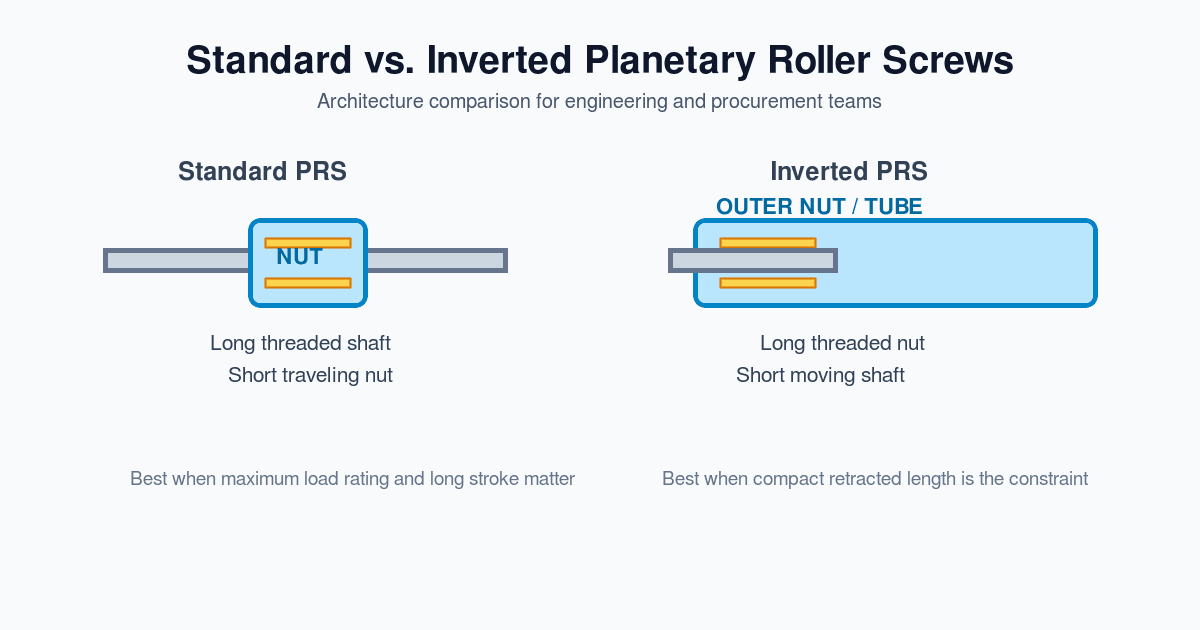
In a Standard Planetary Roller Screw, the architecture closely resembles a traditional ball screw. It consists of a long, externally threaded shaft and a relatively short, internally threaded nut.
Inside the nut, a series of threaded rollers are arranged in a planetary configuration around the central shaft. As the shaft (or nut) rotates, the rollers engage with both the shaft and the nut simultaneously. The rollers are timed by geared rings at the ends of the nut to ensure they do not migrate axially relative to the nut housing.
The Advantages
- Maximum Load Capacity: Because the internal threads of the nut are short, they are easier to machine and harden to extreme levels. This yields the highest possible dynamic and static load ratings.
- Extended Stroke Lengths: Standard roller screws can be manufactured in multi-meter lengths when the supplier's shaft support, critical-speed, and handling limits are satisfied.
- Easier Lubrication: The short nut makes it relatively straightforward to pump grease directly into the roller contact area via a zerk fitting on the nut body.
The Limitations
- Large Retracted Length: An actuator built with a standard roller screw requires a housing that is significantly longer than the stroke length itself, creating a "dead length" penalty.
- Critical Speed Restrictions: Long, spinning shafts are susceptible to whipping (reaching their critical speed), limiting the maximum RPM and linear velocity at extended strokes.
2. Core Mechanics: Inverted Planetary Roller Screws
An Inverted Planetary Roller Screw flips the traditional geometry. As noted by Tolomatic's engineering resources, the inverted design operates similarly to a standard screw, except the functions of the nut and screw are reversed.
Here, the internally threaded nut is elongated (often acting as the push-tube or integrated directly into the motor rotor), while the externally threaded shaft is short (only as long as the roller assembly). The rollers move inside the long nut, traveling with the short shaft.
The Advantages
- Ultra-Compact Packaging: The inverted design is space-saving. The motor can be wrapped directly around the elongated nut, meaning the entire actuator's retracted length is only slightly longer than the stroke itself.
- No Shaft Whip (Higher Speeds): Because the long component (the nut) is supported continuously by large outer bearings, the critical speed limitations of a slender spinning shaft are eliminated.
The Limitations
- Higher Manufacturing Cost: As Linear Motion Tips highlights, roller screw actuator cost is sensitive to geometry, volume, and manufacturing complexity. Inverted roller screws add precision threading within the nut's long inner diameter (I.D.), so treat any premium as supplier- and length-specific until quoted.
- Reduced Load Ratings: The metallurgical difficulty of hardening and grinding deep internal threads means the threads in an inverted nut can carry a lower certified dynamic load rating than a comparable standard screw. Use the manufacturer's rated $C$ value for life calculations rather than assuming equal capacity from nominal diameter.
3. Comprehensive Engineering Comparison
When making a procurement or engineering specification decision, mapping out the quantitative differences is essential. Below is the structural comparison between the two variants.
| Specification / Feature | Standard Planetary Roller Screw | Inverted Planetary Roller Screw |
|---|---|---|
| Primary Moving Component | Usually the Nut (along a fixed shaft) | Usually the Shaft (inside a rotating nut) |
| Actuator Dead Length | High (Stroke + Nut + Bearings + Motor) | Minimal (Motor surrounds the nut) |
| Relative Cost | Baseline (standard external precision grinding) | RFQ estimate band is commonly higher for custom designs because of deep-hole I.D. grinding |
| Dynamic Load Capacity (C) | Usually strongest for a given nominal diameter | Must use supplier-certified $C$; can be lower if long internal threads limit hardening or finish quality |
| Stroke Limitations | Long strokes are possible when support bearings and critical speed are checked | Best for compact strokes; long strokes need explicit supplier confirmation of I.D. machining capability |
| Critical Speed (Whip) | High risk on long strokes | Very low risk (Nut is rigidly supported) |
| Typical Use Cases | Steel mills, large presses, injection molding | Humanoid robots, aerospace, suspension struts |
4. Deep Dive: Load Capacity and L10 Fatigue Life
One of the most misunderstood aspects of selecting an inverted roller screw is its impact on L10 fatigue life.
The L10 life of any rolling element mechanism is proportional to the cube of the dynamic load rating $(C / F)^3$. Because inverted roller screws face manufacturing constraints—specifically, the difficulty of maintaining a uniform case-hardness depth along a very deep internal thread—their dynamic load rating ($C$) is often lower than a standard screw of identical nominal diameter.
As a screening example, if a proposed inverted screw has a certified dynamic load capacity that is 15% lower than its standard counterpart, its theoretical L10 life drops by nearly 40% under the exact same applied load. This is not a substitute for the vendor's full life model, but it explains why procurement should request the actual rated $C$ value for the exact design.
Procurement Tip: When replacing a standard roller screw with an inverted one to save space, you cannot match them 1-to-1 by nominal diameter. You will almost certainly need to step up one size in the inverted range to match the life expectancy of the standard screw you are replacing.
If your team is still comparing screw families, the adjacent inverted roller screw vs. ball screw guide explains why roller contact geometry changes duty-cycle and shock-load assumptions.
5. Lubrication, Maintenance, and Thermal Challenges
The Machine Design analysis of roller vs ball screws specifically warns that inadequate lubrication leads to significantly shorter life. This challenge is magnified in inverted roller screws.
Standard Roller Screw Lubrication
With a standard roller screw, the nut is short. Engineers can place a grease port directly on the nut housing. As the nut travels, it applies fresh grease across the length of the exposed shaft. Wipers at the ends of the nut keep the grease contained within the roller contact zone.
Inverted Roller Screw Lubrication
In an inverted architecture, the rollers are buried deep inside a long tube (the nut). Injecting fresh grease into the actual roller contact zone while the actuator is deployed is geometrically complex.
- The Piston Effect: As the short shaft moves back and forth inside the long nut, it acts like a syringe, pushing the grease to the extreme ends of the nut tube, starving the rollers in the middle.
- Sealing Challenges: Sealing a long internal bore against particulate ingress is harder than wiping an external shaft.
Therefore, inverted roller screws often rely on specialized high-adhesion greases, or they require complex gun-drilled lubrication channels through the center of the shaft to deliver grease directly to the rollers.
6. Manufacturing Cost Drivers
Procurement teams must account for the higher Capital Expenditure (CapEx) that inverted roller screws can require. Why can they carry a material RFQ premium?
- Deep Internal Grinding: Machining a precision thread on the outside of a shaft is a standard, highly automated CNC grinding process. Grinding a precision thread on the inside of a blind or through-hole tube requires specialized, highly rigid internal grinding spindles that must resist deflection.
- Scrap Rates: If a flaw occurs during the internal grinding of a 600mm long inverted nut, the entire expensive forging is scrapped.
- Economies of Scale: Standard roller screws are produced in higher volumes for general heavy industry, benefiting from economies of scale. Inverted screws are often custom-engineered for specific aerospace or robotics envelopes.
7. Application Suitability: When to Choose Which
Choose the Standard Planetary Roller Screw When:
- You have ample longitudinal space in your machine design.
- The stroke length exceeds 1 meter.
- You need the absolute highest load capacity and longest L10 life for a given diameter.
- The environment is exceptionally dirty (easier to use bellows and shaft wipers).
- Cost constraints are rigid.
- Example: Heavy duty presses, injection molding machines, heavy material handling.
Choose the Inverted Planetary Roller Screw When:
- Package length is the ultimate limiting factor.
- You are integrating the screw directly into a frameless motor (Integrated Servo Actuators).
- The actuator must move at high velocities without the shaft whipping.
- The application is weight-sensitive, and the outer tube serves double duty as the structural support.
- Example: Humanoid robot joints (knees/hips), aerospace flight surface controls, active vehicle suspensions.
For robot joint sizing details, see the focused guide on selecting inverted roller screws for humanoid robots.
8. Engineering & Procurement Checklist
Before issuing a Purchase Order (PO) or finalizing CAD for an inverted roller screw, complete this checklist with your vendor:
- Load Normalization: Has the L10 life been recalculated using the inverted dynamic load rating ($C$), confirming it meets the duty cycle?
- Stroke Limit Verification: Is the required stroke length within the manufacturer's capability for internal deep-hole grinding?
- Lubrication Path: How will the inverted screw receive grease? Is it greased-for-life, or is there an internal lube port drilled through the shaft?
- Thermal Expansion: If integrated directly into a frameless motor, has the thermal expansion of the nut (motor rotor) been accounted for in the backlash tolerance?
- Lead Time Alignment: Have you checked whether the supplier treats the inverted nut as a custom internal-grinding order rather than a catalog delivery item?
- Sealing Strategy: Is there a robust wiper seal at the open end of the inverted nut to prevent grease migration and dust ingress?
9. Frequently Asked Questions (FAQ)
Q: Can I use an inverted roller screw to completely replace a hydraulic cylinder? A: Often, yes. Inverted roller screws are commonly selected for hydraulic-cylinder replacement programs because their external form factor and retracted length can closely mimic cylinder geometry. Treat drop-in retrofit claims as conditional until mounting, force, duty cycle, control safety, and service access are verified.
For a procurement model that includes energy, leakage, maintenance, and downtime assumptions, review the inverted roller screw vs. hydraulic cylinder TCO guide.
Q: Why does the inverted screw have a higher speed rating? A: In a standard screw, spinning a long, thin shaft at high speeds causes it to resonate and whip (like a jump rope). In an inverted screw, the long component (the nut) is a thick, rigid tube supported by massive bearings, while the shaft is short and rigid. This eliminates the whip effect.
Q: Is back-drivability different between standard and inverted screws? A: Not inherently. Back-drivability depends entirely on the lead (pitch) of the thread and the friction coefficient. However, because inverted screws are often used in robotics (which require back-drivability for impedance control), they are frequently specified with larger leads (e.g., 5mm or 10mm) to ensure they can be back-driven during impacts.
Q: Are standard planetary roller screws always cheaper? A: Generally, yes. The machining complexity of an external thread (standard) is vastly lower than a deep internal thread (inverted). For long strokes, the cost gap widens significantly.
Next Steps: Optimizing Your Actuator Design
Choosing between a standard and an inverted planetary roller screw is a foundational decision that dictates the mechanical architecture of your entire system. If you are struggling to balance the compact package of an inverted screw with the higher load capacity of a standard screw, you don't have to guess.
Contact our motion control engineering team for a detailed application review. We can provide comparative L10 life calculations, 3D envelope models, and TCO (Total Cost of Ownership) analyses for both standard and inverted solutions tailored to your specific forces and speeds.
Sources & References
- What's the Difference Between Roller and Ball Screws? Machine Design. Available at: Machine Design
- Update on roller-screw actuator design and applications. Linear Motion Tips. Available at: Linear Motion Tips
- How roller-screw and ball-screw actuators compare in high-force applications. Tolomatic. Available at: Tolomatic
Author

Categories
More Posts
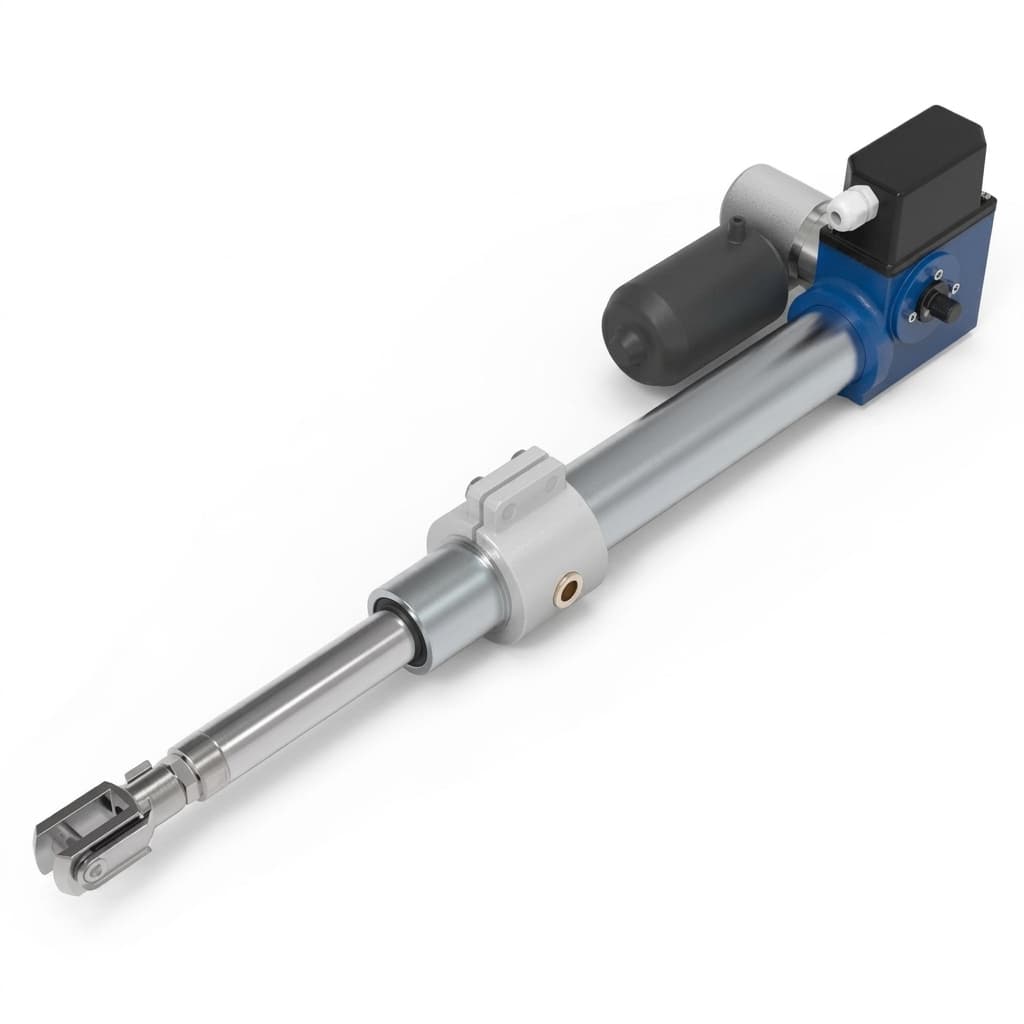
The Manufacturing Process of Inverted Roller Screws: Why Internal Thread Grinding Matters
Go behind the scenes at our factory to understand the complexities of internal thread grinding and why it dictates the quality of inverted roller screws.

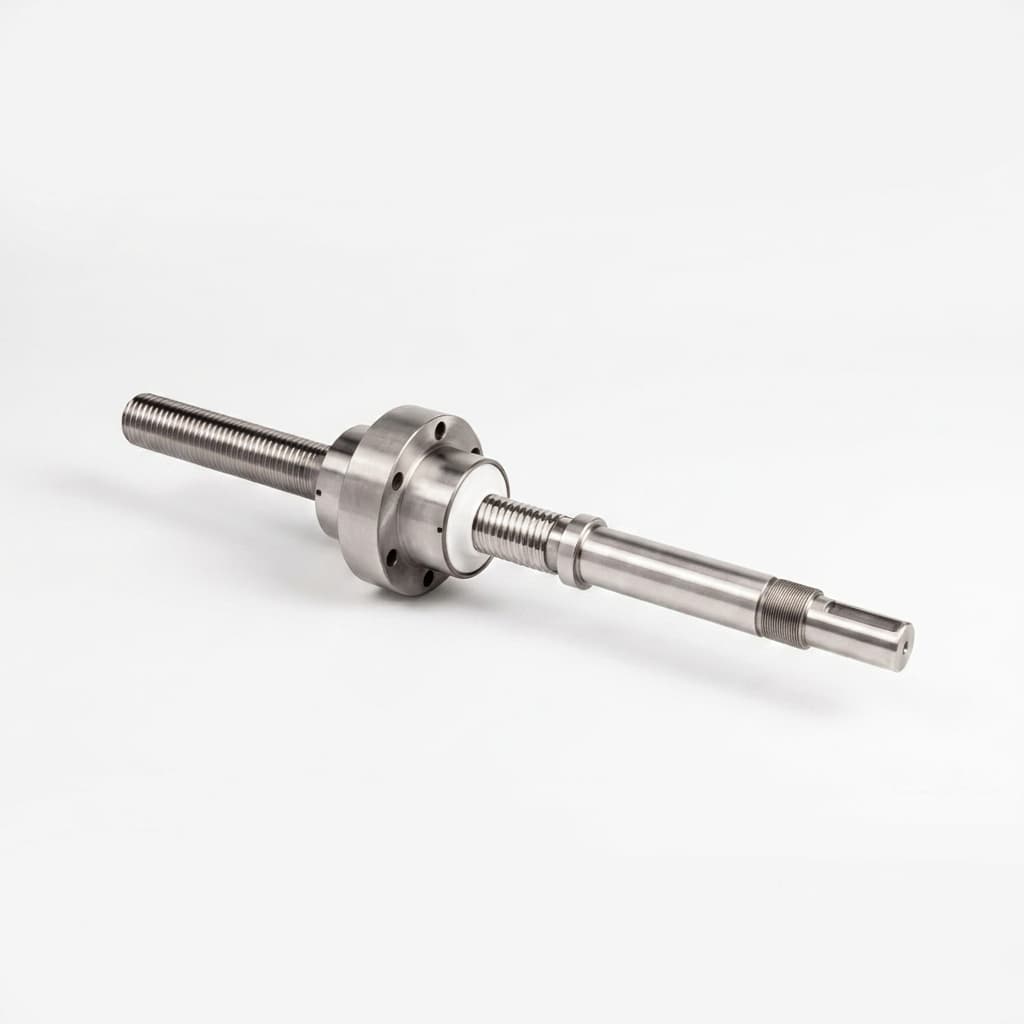
Replacing Hydraulic Cylinders with Inverted Roller Screws: A Total Cost of Ownership (TCO) Analysis
Use this TCO guide to compare hydraulic cylinders with inverted roller screws across energy, maintenance, ESG risk, precision, and migration limits.
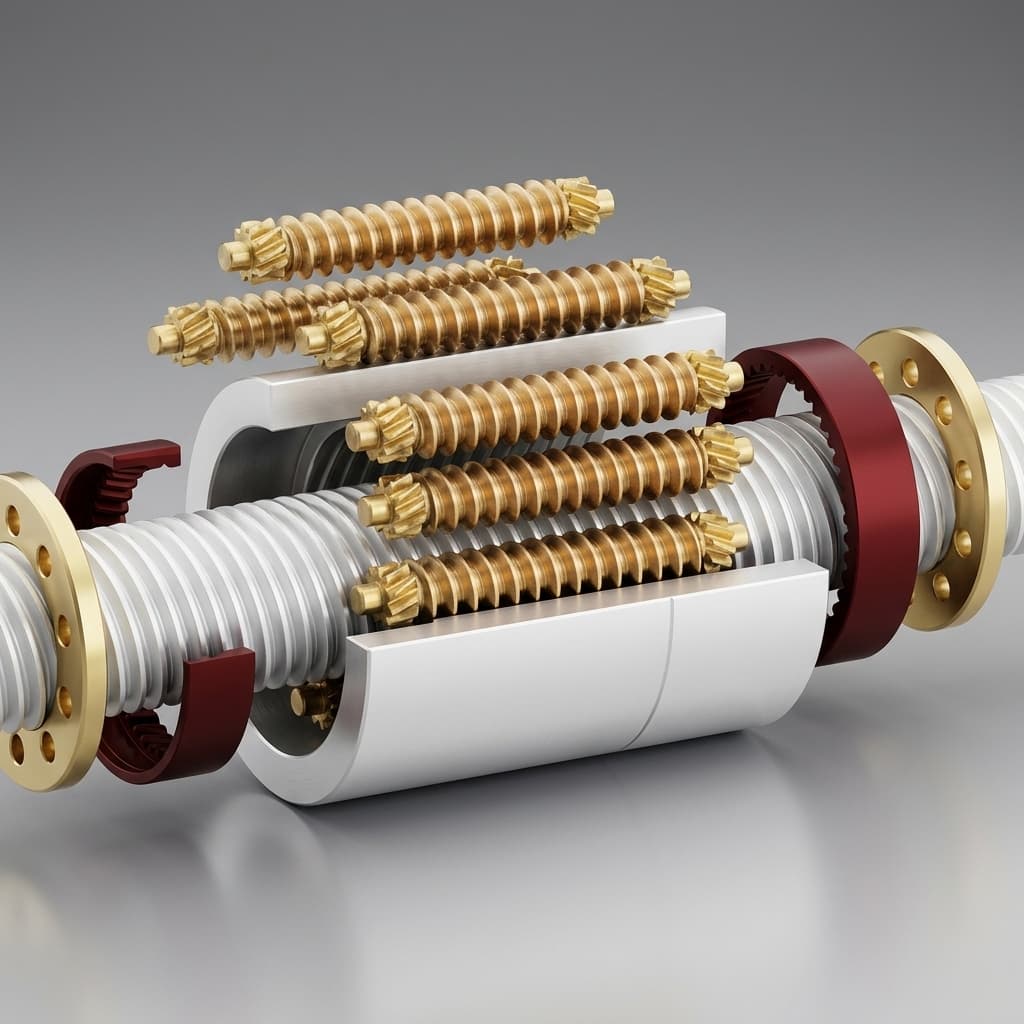
Inverted Planetary Roller Screw vs. Ball Screw: Which is Better for High-Load Actuators?
A detailed engineering comparison between inverted planetary roller screws and traditional ball screws for heavy-duty and compact robotic applications.